
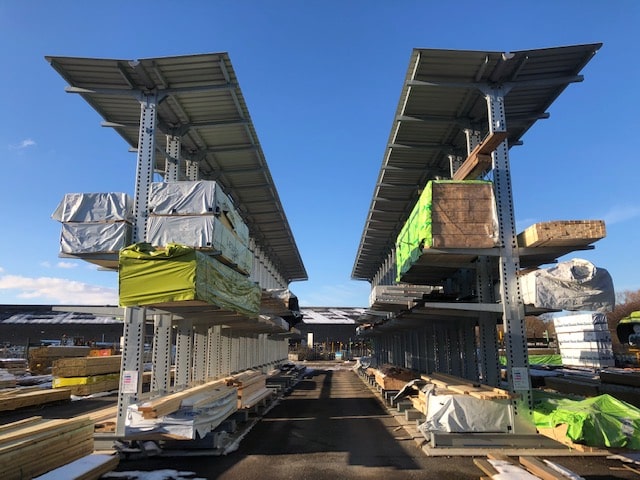
Cantilever racking safety is a critical component of warehouse, yard and storage site health and safety management in the UK. These specialist storage systems are designed for long, heavy, or other loads; such as timber, steel profiles or panel products, but if not properly designed, installed and maintained, they pose significant risks to people and operations alike.
What Is Cantilever Racking?
Cantilever racking is a heavy-duty storage system that uses horizontal arms projecting from vertical columns to support long or bulky items without the obstruction of front uprights. This open-front design makes these systems ideal for materials like timber, pipes and sheet goods, and allows forklifts or manual handlers to access items quickly.
However, the very design that provides flexibility and accessibility also requires thoughtful safety planning and ongoing monitoring to prevent collapse, overloading or instability.
Legal Health & Safety Requirements in the UK
Work Equipment and PUWER
In the UK, all racking systems – including cantilever racking – are classified as work equipment under the Provision and Use of Work Equipment Regulations 1998 (PUWER). This means they must be:
- Suitable for their intended use
- Properly maintained in a safe condition
- Inspected by a competent person
- Accompanied by relevant training and documentation
Failing to meet PUWER requirements can lead to HSE enforcement notices, fines or liability for accidents.
HSG76 Warehouse Guidance
The Health and Safety Executive’s HSG76 guidance: Warehouse and storage safety explicitly includes racking inspections and maintenance as part of effective warehouse safety management. Inspections help detect early signs of damage before they escalate into serious failures or collapses.

SEMA and Industry Standards
Industry bodies like SEMA (Storage Equipment Manufacturers Association) publish codes of practice and safety awareness training for warehouse and yard racking, ensuring compliance with UK and European standards.
Cantilever Racking Safety: Use and Setup
Correct Installation
Proper installation is the foundation for safe operation. Key elements include:
- Installing on level, adequately reinforced floors, uneven surfaces can cause instability and torsional stress.
- Ensuring uprights are aligned and level within tight tolerances as per manufacturer and HSE guidelines.
- Bolt-down of base plates where required for stability and to prevent uplift or sway during loading/unloading.
Traffic & Impact Protection
Racking systems are vulnerable to damage from material handling equipment:
- Install column protectors, bollards and rack edge guards.
- Maintain clear aisle widths suitable for forklift or side‐loader movements.
- Train operators to avoid collisions, a leading cause of racking damage.
Load Positioning & Distribution
- Place heavier items lower and distribute weight evenly across the arms.
- Do not allow goods to protrude excessively beyond the racking arm ends.
- Use additional safety guards if items can shift or roll off arms.
Display and Respect Load Limits
Every cantilever rack must have a visible Safe Working Load (SWL) plate, indicating maximum permissible load per arm and per bay. This helps prevent dangerous overloading and uneven weight distribution, the most common contributors to racking failure.
Safe Cantilever Racking Use and Setup
Why Racking Inspections Matter
Routine inspections identify early signs of damage, misalignment and or overloading, before these problems lead to:
- Racking collapse
- Falling materials
- Injuries or fatalities
- Operational downtime
- HSE enforcement action
A robust inspection programme also demonstrates compliance with PUWER and HSG76.
Recommended Inspection Frequency
A typical inspection regime includes:
- Daily or weekly visual checks by trained staff for obvious damage or overloads.
- Monthly internal inspections by a designated inspector or PRRS (Person Responsible for Racking Safety).
- Annual formal inspections by a competent person such as a SEMA Approved Rack Inspector (SARI).
The SEMA Traffic-Light System
Professional inspectors often use a risk-rating approach:
Green:
Safe to use with minor wear
– Continue monitoring.
Amber:
Moderate damage
– Unload and repair within a set period.
Red:
Severe damage
– Unload & repair immediately before reuse.
Racking Inspection Reports should be documented and retained for compliance and auditing.
Cantilever Racking Training & Staff Awareness
Staff working around cantilever racking should be trained to:
- Understand load limits and safe stacking
- Recognise signs of damage or instability
- Conduct basic visual inspections
- Report defects promptly
Training programmes that cater to Cantilever racking safety awareness equip teams with practical skills and knowledge.
Safety & Operations Best Practices
| Aspect | Best Practice |
|---|---|
| Installation | Level floors, aligned uprights, correct anchoring |
| Load Control | Visible SWLs, even distribution, no overload |
| Inspections | Daily checks | monthly internal | annual external |
| Training | Staff awareness and formal training courses |
| Protection | Physical guards, clear aisles, operator discipline |