
Choosing the right pallet racking system for a distribution warehouse is an important decision that can directly influence storage capacity, order fulfilment efficiency, workplace safety and long-term operating costs. With growing stock volumes, increasing customer expectations and the need to make better use of warehouse space, having an efficient storage system is essential for modern distribution operations.
However, not every warehouse racking system is suitable for every business. The right solution depends on the type of goods being stored, the available warehouse space, stock turnover, material-handling equipment and how frequently products need to be accessed.
Whether you are setting up a new distribution centre, upgrading an existing warehouse or looking to increase storage capacity, selecting the right pallet racking system can help improve organisation, streamline warehouse operations and support future growth.
In this guide, we explore the key factors to consider when choosing a pallet racking system for your distribution warehouse.
Why Is the Right Warehouse Racking System Important?
Warehouse racking systems do more than provide a place to store goods. They influence how inventory is organised, how efficiently staff can retrieve products and how effectively your warehouse operates.
A well-designed pallet racking system can help businesses:
- Maximise warehouse storage capacity by making better use of floor space and vertical height.
- Improve stock accessibility and inventory organisation.
- Reduce unnecessary movement during picking and replenishment.
- Support efficient forklift and material-handling operations.
- Improve warehouse safety through appropriate storage design.
- Accommodate changing inventory requirements and business growth.
For distribution centres handling large volumes of goods, an inefficient storage layout can lead to congestion, wasted space, longer picking routes and increased operational costs. Investing in a suitable warehouse racking solution can help address these challenges while creating a more organised working environment.

Assess Your Warehouse Space and Storage Requirements
Before choosing a pallet racking system, it is important to understand the available space and how it can be used effectively.
Start by assessing your warehouse’s dimensions, including floor space, ceiling height, structural columns, loading bays, doors and other fixed obstructions. These factors will influence the layout, racking configuration and storage capacity you can achieve.
Vertical space is particularly important. Many distribution warehouses have unused space above existing storage arrangements. Installing suitable warehouse racking can help take advantage of available height, potentially increasing pallet capacity without expanding the building footprint.
However, maximising height should not be the only objective. The storage system must also allow safe access to stock, accommodate handling equipment and maintain appropriate clearance for building services and safety requirements.
A warehouse site assessment can help identify opportunities to improve storage density while maintaining practical access and efficient operations.

Consider the Type of Goods You Need to Store
The products stored within your distribution warehouse will play a major role in determining the most suitable pallet racking system.
Consider the size, weight, shape and packaging of your inventory. You should also assess whether goods are stored on standard pallets, non-standard pallet sizes, stillages or other load carriers.
For example:
- Standard palletised goods may be suitable for adjustable pallet racking.
- Long or bulky materials may require cantilever racking.
- Smaller goods and manually picked items may benefit from shelving or pigeon hole storage.
- High-volume stock with limited product lines may benefit from higher-density storage arrangements.
It is also important to consider whether your inventory consists of fast-moving products, slow-moving stock, seasonal goods or items requiring specific handling and storage conditions.
Understanding your stock profile helps ensure that your warehouse racking system supports your actual operational requirements rather than simply providing the maximum number of storage positions.
Explore Different Types of Pallet Racking Systems
There are several types of warehouse racking systems available, each offering different advantages depending on the storage requirements of your distribution operation.
Adjustable Pallet Racking
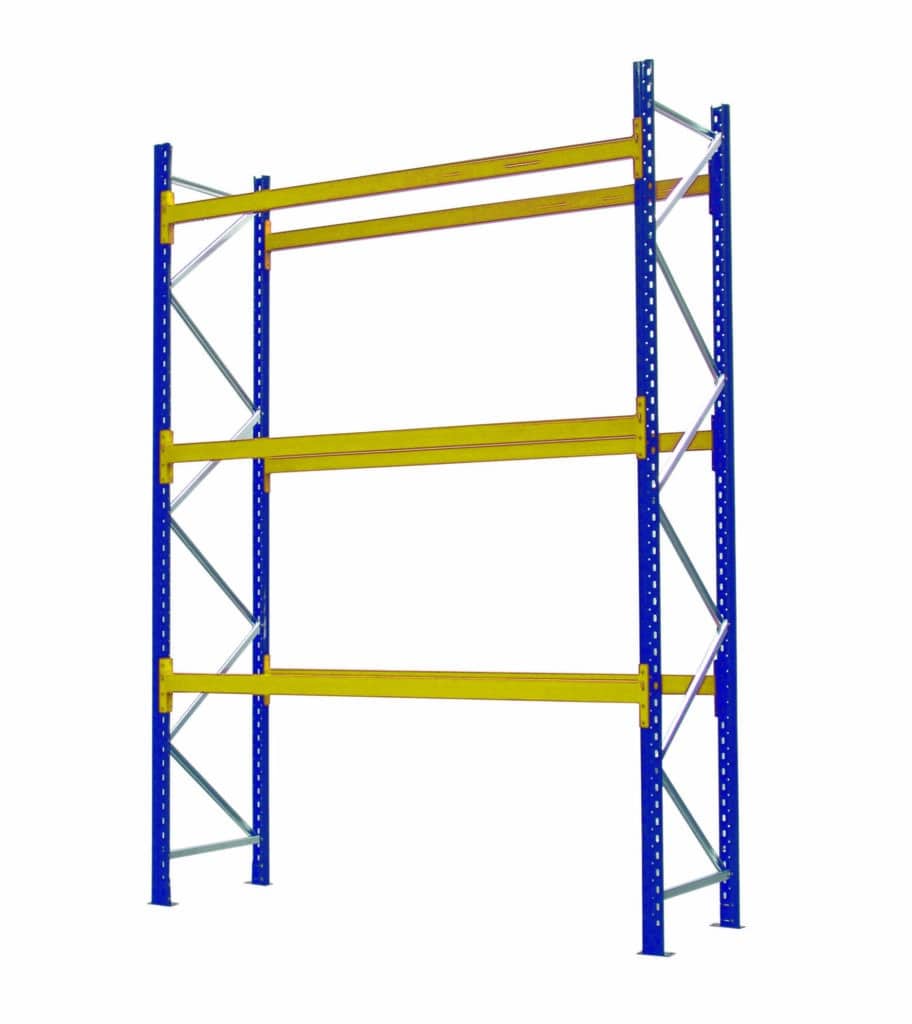
Adjustable pallet racking is one of the most widely used warehouse storage systems. It provides direct access to individual pallet positions and can be configured to accommodate different pallet sizes, load heights and storage requirements.
It is particularly suitable for distribution warehouses handling a wide variety of products where stock accessibility and flexibility are important.
The ability to adjust beam levels can also make it easier to adapt the system as inventory requirements change, subject to appropriate design and approval.
Cantilever Racking
Cantilever racking is designed for storing long, bulky or irregularly shaped items that may not fit conveniently within conventional pallet racking.
It is commonly used for products such as timber, steel sections, pipes, construction materials and other long goods.
Its open-fronted design provides convenient access to stored materials and can help businesses organise products that require specialist storage arrangements.
High-Density Pallet Racking
High-density pallet racking systems can help businesses increase storage capacity by reducing the amount of space allocated to access aisles.
Depending on the system, these arrangements may require forklifts to enter storage lanes or may use specialised handling equipment.
High-density storage can be particularly useful where warehouse space is limited and inventory consists of larger quantities of fewer product lines. However, businesses should carefully consider stock accessibility, rotation requirements and operational efficiency before selecting such a system.
Bespoke Warehouse Storage Systems
Bespoke warehouse racking systems can be designed around specific building dimensions, inventory characteristics, handling equipment and operational workflows.
Custom storage solutions may help businesses make better use of awkward spaces, accommodate specialist products or improve the organisation of their warehouse operations.
Match Your Racking System to Your Material-Handling Equipment
Your warehouse racking system must work effectively with the equipment used to move and retrieve stock.
Forklifts, reach trucks, pallet trucks and other material-handling equipment all have different operating requirements. These requirements should be considered when designing the warehouse layout and determining aisle widths, rack heights and storage configurations.
For example, a warehouse using reach trucks may be able to operate within different aisle dimensions from one using conventional counterbalance forklifts. The appropriate configuration will depend on the specific equipment, loads, operating conditions and manufacturer requirements.
The following must be considered:
- Forklift turning circles and operating clearances.
- Maximum lifting height and load dimensions.
- Aisle width requirements.
- Pedestrian routes and crossing points.
- Loading and unloading operations.
- Visibility and accessibility throughout the warehouse.
Choosing a racking system without considering the handling equipment can create operational difficulties, potentially reducing productivity and increasing the risk of accidents.
A properly planned warehouse storage layout should integrate the racking system and handling equipment from the outset.
Think About Stock Rotation and Accessibility
How quickly inventory moves through your distribution warehouse can influence which pallet racking system is most suitable.
Businesses handling fast-moving products may prioritise rapid stock access, shorter picking routes and efficient replenishment. Warehouses storing larger quantities of fewer products may prioritise storage density.
Stock rotation requirements should also be considered.
First-in, first-out (FIFO) storage may be important for products with expiry dates or where stock rotation is essential. Last-in, first-out (LIFO) arrangements may be suitable for certain goods where stock rotation is less critical.
The storage system should support the inventory management approach used by your business.
For warehouses handling a large number of product lines, individual pallet access may be particularly important. For businesses storing bulk quantities of the same product, higher-density systems may offer greater space efficiency.
The best pallet racking system is one that balances storage capacity with the accessibility your operation requires.

Prioritise Warehouse Racking Safety
Safety should be a fundamental consideration when selecting and installing warehouse pallet racking.
Racking systems must be suitable for the loads they are intended to support and should be designed, installed, inspected and maintained appropriately.
Important considerations include:
- Maximum pallet and beam load capacities.
- Appropriate rack configuration and structural design.
- Suitable pallets and load stability.
- Forklift impact protection where required.
- Clear load capacity signage.
- Safe aisle arrangements and pedestrian routes.
- Routine inspections and reporting of damage.
Warehouse racking should not be altered, repositioned or modified without appropriate technical assessment. Changes to beam levels, components or loading arrangements may affect the structural performance of the system.
Businesses should also establish procedures for identifying, reporting and addressing damaged racking. Details on this can be located on the SEMA website.
Planning safety into your warehouse storage system from the beginning can help support a safer and more reliable working environment.

Plan for Future Warehouse Growth
Your distribution warehouse may have different storage requirements in the future as your business grows, introduces new products or changes its fulfilment processes.
A warehouse racking system should ideally provide sufficient flexibility to accommodate future operational changes where practical.
Consider whether your storage system could accommodate:
- Increased inventory volumes.
- New product sizes or pallet formats.
- Changes in stock turnover.
- Additional handling equipment.
- New picking or replenishment processes.
- Warehouse expansion or layout changes.
Planning for future growth can help reduce the likelihood of costly storage redesigns and operational disruption.
A scalable warehouse storage solution can provide greater flexibility as business requirements evolve.

Work with an Experienced Warehouse Racking Supplier
Choosing the right pallet racking system involves more than selecting a product from a catalogue. It requires an understanding of warehouse operations, load requirements, building dimensions, handling equipment and the practical demands of distribution.
Working with an experienced warehouse racking supplier can help you identify suitable storage configurations and develop a system tailored to your requirements.
From initial planning and design to manufacturing, installation and ongoing support, a specialist supplier can help ensure that your warehouse storage system is suitable for your operation.
At S.E.M.CO, we provide warehouse storage and racking solutions designed to support businesses across a range of sectors, including distribution and logistics.
Our solutions can help businesses make better use of available warehouse space, organise stock more effectively and develop storage systems suited to their operational needs.
Choosing the right pallet racking system for a distribution warehouse requires careful consideration of storage capacity, inventory characteristics, handling equipment, stock accessibility, safety and future business requirements.
The right system can help improve warehouse organisation, make better use of available space and support more efficient distribution operations.
Whether you require standard pallet racking, cantilever storage or a bespoke warehouse racking solution, taking the time to assess your requirements can help you make a more informed long-term investment.
Looking to improve storage capacity or upgrade your distribution warehouse?
Contact S.E.M.CO to discuss your warehouse storage requirements and explore racking solutions designed to support your business.
Explore S.E.M.CO’s distribution and logistics racking solutions.