
Upgrading or expanding your warehouse storage is a big decision, and one of the most common questions we hear at S.E.M.CO is:
“Is buying second-hand racking a good way to save money?”
On the surface, used racking often looks like a bargain. But without a clear history, professional inspection or traceability, what seems like a cost-saving can rapidly turn into a safety issue, ongoing expense, or worse.
Let’s get down the key factors every warehouse manager should consider before purchasing second-hand racking.
What Is The Real Cost of “Cheap” Racking?
Second-hand racking comes under many terms some of which being: ‘part-worn’, ‘lightly-used’, and ‘used’. This type of racking often costs significantly less upfront, which makes it tempting for tight budgets.
However:
- You do not know how it was used or maintained.
- There is usually no documentation of inspections, repairs or safe load history.
- There may be hidden damage that only shows up once in operation.
- There will always, without a doubt be connector pins and load notices missing leaving you with a partially finished rack set up.
This uncertainty puts your staff, stock and productivity at risk, and that “saving” can quickly disappear in repair costs, lost capacity or accelerated replacement.
Why Safety and Structural Integrity Matter
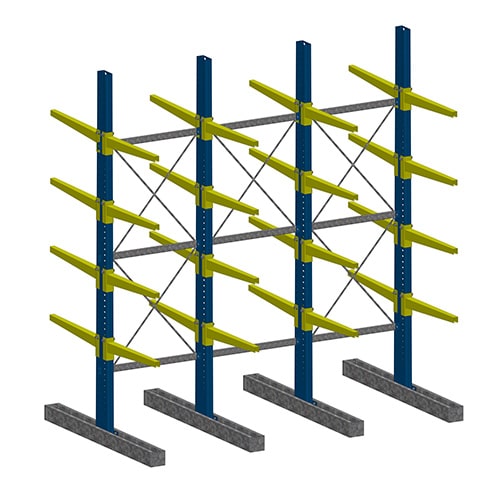
Whether new or used, a cantilever racking system or pallet racking system, it must support consistent loading and unloading without failure.
Used racking may have:
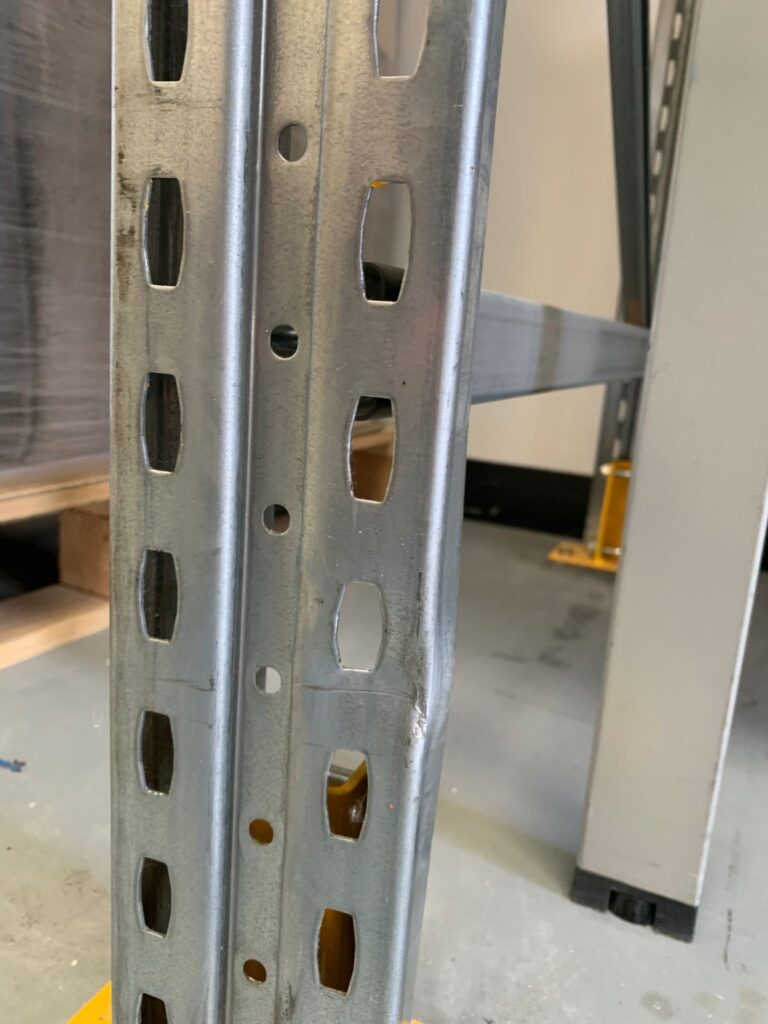
- Bent uprights or compromised beams, often from previous impacts or overloads.
- Internal corrosion or weakened steel from poor storage or weather exposure.
- DIY repairs or modifications that were not engineered or certified.
Without a professional inspect-and-certify process, there is no guarantee the structure can safely perform at its rated capacity. This elevates risk to your team and your insurance compliance.

Why Compatibility With Your Warehouse Setup Is Crucial?
Every warehouse has its own dimensional and operational needs:
- Beam heights, arm lengths, aisle space, load weight, pallet types and more, all influence design.
- Used systems often come in fixed sizes that may not fit right with your existing layout.
- Mixing makes, models or incompatible parts can create unsafe connections or inefficient storage.
New racking systems, by contrast, are fully customisable to your floor space, product flow, and load requirements, improving both capacity and safety.
The Importance Of Traceability, Documentation & Compliance
When you invest in new racking through a trusted industrial storage supplier like S.E.M.CO, you will:
- Receive clear design documentation and load notices.
- Have a system that meets modern UK standards and regulations (SEMA & HSE to name a few).
- Have an in-house expert SEIRS qualified team to install your racking in your warehouse or yard at a date that is convenient for you.
- Have the option for S.E.M.CO to annually inspect your recently installed racking by their in-house qualified SARI (SEMA Approved Racking Inspector).
- Have components that are traceable back to manufacturing tests and specifications.
With used racking, documentation – if it exists at all – is unreliable. This makes compliance with safety regulations harder to verify and can affect your insurance coverage and operational duty of care.

What Are The Long-Term Maintenance and Replacement Costs?
Many operators forget that the total cost of ownership includes maintenance, inspections, and future upgrades.
With second-hand racking:
- There is no guarantee on its safety.
- Replacement parts might be discontinued or unavailable.
- Unexpected repairs will come out of your budget.
New systems, on the other hand, come with manufacturer support, ongoing part availability that protects your investment.

When Does Used Racking Might Make Sense?
There are some situations where second-hand racking can be part of the solution, such instances may be:
- Temporary storage needs, or short-term expansion.
- Projects where inspection and refurbishment can be performed by trained professionals.
But even in these cases, you should always:
- Have the system professionally inspected before purchase.
- Understand the full history and usage of the equipment.
- Confirm parts and load data from a reliable source.
Without these steps, the apparent price saving could cost far more in the long run.
Think Beyond the Price Tag
Buying second-hand racking can seem cost-effective initially, but without traceability, engineering certainties, or documented safety history, it is a gamble with your employees, products and profits.
At S.E.M.CO, we believe in storage solutions that are:
- Safe and reliable
- Optimised for your operation
- Backed by technical expertise
- Built and supplied with full documentation and on-going support
If you are considering expanding or upgrading your warehouse storage, from standard cantilever and pallet racking to retail shelving or bespoke heavy-duty steel systems, our team can help you make the right choice for your business.
Contact S.E.M.CO today for a tailored consultation or site survey.