
Why Racking Safety and Warehouse Racking Compliance Are So Important
Business growth is something worth celebrating. More customers, more products and higher stock volumes are all positive signs, but growth can also expose a problem that is not always immediately obvious: your warehouse racking system may no longer be suitable for the business you have become.
A racking system that worked perfectly five or ten years ago may struggle to cope with today’s stock levels, product range, handling equipment and operational requirements.
The result can be more than a lack of space. An undersized or poorly configured storage system can contribute to congestion, inefficient stock movement, unnecessary handling and increasing pressure on warehouse staff.
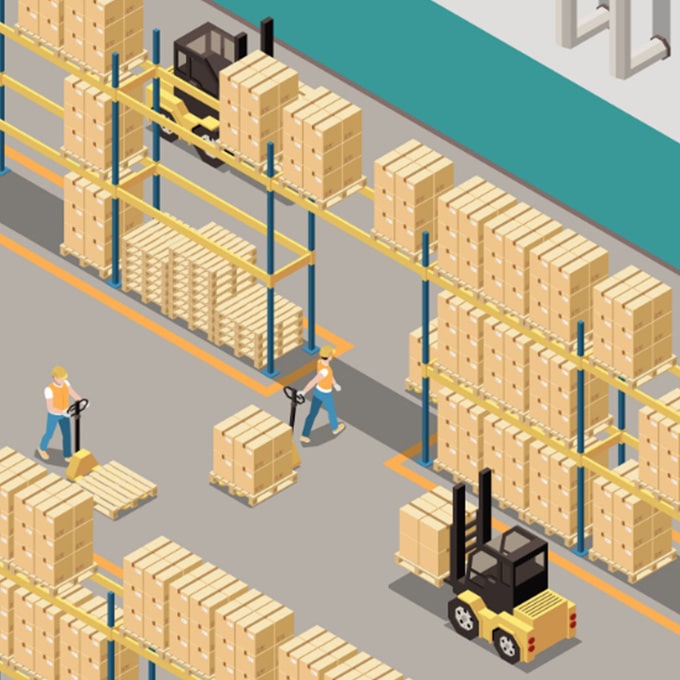
So, how do you know when it is time to review your warehouse racking? Here are five signs to look for:
1. Your Warehouse Floor Is Becoming Overflow Storage
One of the clearest warning signs is stock appearing everywhere except the storage locations designed for it.
You may notice:
- Pallets being stored on the floor
- Products stacked in ‘temporary’ locations
- Stock blocking aisles
- Materials stored beside racking
- Overflow areas appearing around the warehouse
- Products being moved multiple times before they reach their final location
Some temporary floor storage may be unavoidable during particularly busy periods. However, if it has become a normal part of your operation, your warehouse is telling you something: you may not have enough usable storage capacity.

The important word here is ‘usable’. A warehouse can have plenty of floor area and still be short of storage capacity if that space is not properly organised. Good warehouse racking allows you to make better use of vertical space and create defined storage locations rather than relying on the floor. S.E.M.CO manufactures storage systems designed around individual warehouse requirements, with configurations available for different operational and storage needs.
2. Your Stock Levels Have Increased but Your Racking Hasn't
Perhaps your business has grown gradually, with new customers, additional product lines and larger orders from existing customers. Over time, that additional stock can start putting significant pressure on the warehouse.
Your racking may not have changed, but the amount you need to store has.
This is one of the simplest indicators that your storage infrastructure needs reviewing. Start by comparing your original storage requirements with today’s operation and consider how those requirements are likely to change in the future.
Ask:
- How many pallets or storage positions did we need when this racking was installed?
- How many do we need now?
- What do we expect to need in two or three years?

That final question is particularly important. A storage system should not necessarily be designed around today’s stock alone. S.E.M.CO’s storage system design process considers factors including the products being stored, load requirements, forklift operation and future growth plans. The objective is to create a system that supports the business rather than forcing you to continually react to growth.
3. Your Product Range Has Changed
You can outgrow your racking without dramatically increasing the amount of stock you hold. Sometimes the issue is simply that your products have changed.
For example, perhaps you originally stored mainly standard pallets but now handle:
- Timber
- Steel
- Pipes
- Panels
- Mixed-size Materials
- Small Components
- Bulky Products
- Long Lengths
Different products create different storage challenges. A system designed primarily for palletised goods may not be the most efficient option for long or bulky materials, which is why choosing the right type of racking is so important.
Pallet Racking
Pallet racking is a versatile solution for palletised goods and can be configured for different storage and access requirements.
Cantilever Racking
Cantilever racking is particularly suited to long, bulky and difficult-to-store products such as timber, steel, pipes and panels. Its open-front design can make loading and retrieval more straightforward.
Vertical Storage Racking
Vertical storage racking can help businesses store long products upright while making better use of available floor space.
Widespan Shelving
For smaller goods, boxes and hand-picked products, widespan shelving may be more appropriate than heavy-duty pallet storage.
If your product range has changed significantly, do not simply add more of the same racking. Take the opportunity to review whether your storage system still matches your stock.
4. Your Team Is Spending Too Much Time Looking for or Moving Stock
Warehouse inefficiency is not always immediately visible on a balance sheet. It can show up in the wasted minutes involved in searching for products, moving pallets to access other stock or temporarily relocating goods because there is nowhere to put a new delivery.
A frequently picked product might be stored at the opposite end of the building, while a forklift operator may have to move one pallet simply to reach another. Each individual delay may seem insignificant, but multiply those minutes across dozens of employees, hundreds of working days and thousands of stock movements, and the cost can become much more significant.
This is why warehouse design should consider more than storage density.
Accessibility matters
The best storage solution needs to balance how much you can store with how efficiently you can retrieve it. If employees are continually working around your racking rather than working efficiently with it, your current configuration may need reviewing. The same applies if your racking is being used differently from how it was originally designed. Heavier products, different pallet sizes, altered beam levels, new handling equipment or extensions and modifications made over time can all affect how suitable the system remains for your operation.
These changes should not simply be treated as operational adjustments. The racking system needs to remain suitable for the loads and conditions under which it operates. HSE publication states that damage to racking can reduce its load-carrying capacity and recommends regular inspection based on operating conditions. It also recommends inspection by a technically competent person at intervals of no more than 12 months.
If significant damage is identified, appropriate action should be taken and affected racking should not simply continue to be used.
5. You Are Constantly Adding "Temporary" Storage
Temporary storage has a habit of becoming permanent. A few pallets are placed outside because the warehouse is full, a temporary shelving area is created, and an unused corner becomes a stockholding area. Before long, another stack appears near the loading bay and the warehouse has developed a collection of unofficial storage locations.
This is often a sign that the original racking system no longer reflects the way the business operates.
It can also make warehouse management more difficult. When every storage location is not clearly defined, stock becomes harder to locate and the movement of people and equipment can become more complicated. A properly planned racking system can bring structure back to the operation.

Do Not Wait Until Your Warehouse Is Full
The worst time to discover that your business has outgrown its racking is when a delivery arrives and you have nowhere to put it.
By then, you are likely to be making short-term decisions. Stock gets moved onto the floor, aisles become congested, temporary storage areas appear, and employees spend more time moving products. Forklift movements can increase, while pressure on the warehouse continues to build.
Planning ahead gives you more options.
If you know your business is growing, reviewing your storage requirements before you reach maximum capacity can help you make a controlled investment rather than an emergency one.

Talk to S.E.M.CO About Your Warehouse Racking
S.E.M.CO is a UK manufacturer of heavy-duty warehouse and yard racking, providing bespoke storage systems designed, manufactured and installed for businesses across the UK. Its product range includes pallet racking, cantilever racking, vertical storage, pigeon-hole racking and widespan shelving. With more than 40 years of experience in the racking and shelving industry, S.E.M.CO can help businesses assess their existing storage and identify opportunities to increase capacity, improve accessibility and create a more effective warehouse layout.
Think your business has outgrown its warehouse racking?
Don’t wait until you’re out of space.
Contact S.E.M.CO to discuss your requirements, request a quote or arrange a site visit.